Quick answer
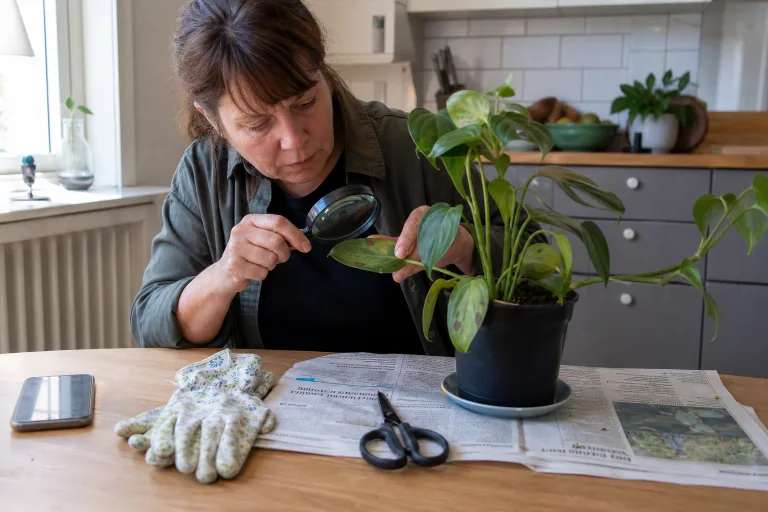
Use a plant disease identifier to narrow possibilities, then verify the pattern. Photograph both affected and healthy tissue, inspect leaf undersides and roots, and compare watering, light, temperature, pests, and recent changes.
- Isolate a plant if a spreading pest is possible.
- Capture close and whole-plant photos.
- Check roots, drainage, and recent care history.
- Confirm serious cases with a local extension service or lab.
Plant disease identifier apps are most useful when you give them a clear symptom and enough context. Fungal disease, insect damage, overwatering, underwatering, sun scorch, nutrient problems, and physical damage can produce overlapping signs. A careful inspection helps you separate them.
Start with the pattern
Look at where the problem began and how it spreads. Lower leaves yellowing one at a time can suggest a different cause from pale new growth. Dry brown edges differ from soft dark patches. Circular spots, powdery coatings, fine webbing, sticky residue, holes, and tiny moving insects are especially useful clues.
Photograph more than one view
- Capture the whole plant to show distribution.
- Take a sharp close-up of the damaged area.
- Photograph the underside of affected leaves.
- Include the soil surface, stem base, or visible roots when relevant.
Check the environment
Ask what changed before the symptoms appeared. Was the plant moved, repotted, fertilized, left in standing water, exposed to cold, or placed in stronger sun? Feel the soil below the surface and confirm that excess water can leave the pot. Inspect neighboring plants because pests can spread.
Use a diagnosis as a working hypothesis
Photo analysis can narrow down likely explanations, but it cannot measure soil moisture deep in the pot or know the full care history. Change one major variable at a time when the plant is stable enough, document what you did, and watch new growth.
How Hanami helps
Use Hanami's health check with a clear symptom photo. Review issue clues and the suggested next steps, then save an observation to the plant's timeline. Notes and repeat photos make it easier to see whether the plant is stabilizing or continuing to decline. For valuable plants, severe infestations, or rapid collapse, contact a local nursery, extension service, or plant pathologist.
Check the result in context
Nutrient, water, light, chemical, pest, and disease problems can look alike. Avoid treatment until the evidence supports a cause.
Sources and further reading
Turn a symptom into a next step
Use Hanami to review visible plant issues, care guidance, and recovery progress in one place.
Download Hanami