Quick answer
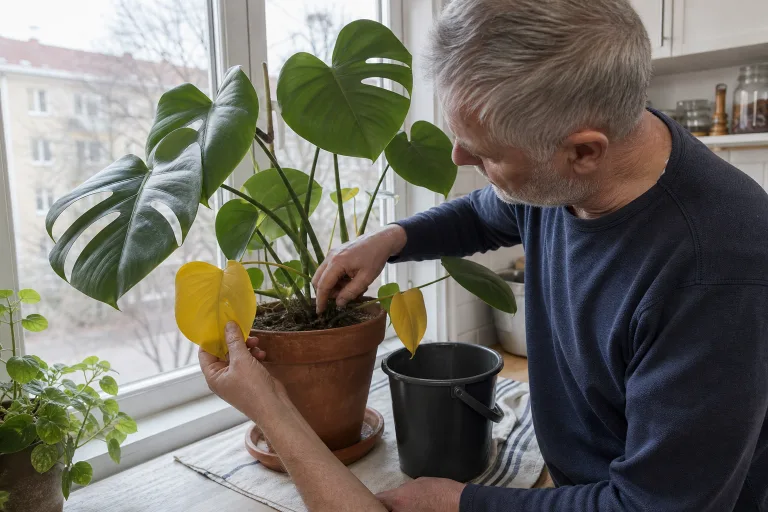
Yellow leaves are a symptom, not a diagnosis. First note which leaves changed, how quickly, whether the soil is wet or dry, and whether roots, pests, light, or temperature changed recently.
- Check soil moisture below the surface.
- Inspect roots and drainage if the mix stays wet.
- Look under leaves and along stems for pests.
- Change one likely cause at a time and observe.
One old lower leaf turning yellow can be normal. Several leaves changing quickly, yellow tissue paired with soft stems, or yellowing with pests deserves closer attention. Before adding fertilizer or changing everything, observe the pattern.
1. Too much water or poor drainage
Consistently wet soil limits oxygen around roots and can lead to yellowing, soft leaves, odor, fungus gnats, or root damage. Check moisture below the surface and confirm the pot has a working drainage hole. Do not add more water until you understand how wet the root zone is.
2. Too little water
Dry soil can also cause yellowing, often with curling, crisp edges, drooping, or very light pot weight. Soil that has become extremely dry may repel water, so rehydrate it evenly and allow excess to drain.
3. Light stress
Low light can lead to pale growth and slow drying; sudden intense sun can bleach or scorch exposed areas. Compare the side facing the window with shaded growth and think about recent moves or seasonal sun changes.
4. Root, nutrient, or pH problems
Damaged or crowded roots can reduce nutrient uptake. Deficiencies may appear in specific patterns on old or new leaves, but adding fertilizer to stressed roots can make things worse. Check roots, soil condition, and feeding history before treating a presumed deficiency.
5. Pests or normal aging
Inspect leaf undersides and stems for mites, scale, thrips, or other pests. If only the oldest leaf yellows slowly while the plant produces healthy new growth, the plant may simply be reallocating resources.
How Hanami helps
Photograph the yellowing and use Hanami to review likely issue clues. Save the plant and record the soil condition, location, and care changes. Repeat photos can help you judge whether new growth is improving. A rapid decline, severe root rot, or a valuable specimen may need hands-on help from a local plant professional.
Check the result in context
One old lower leaf may be normal. Rapid, widespread yellowing, soft dark roots, severe wilt, or a spreading pest deserves faster investigation and isolation.
Sources and further reading
Look beyond the yellow leaf
Hanami helps connect the symptom with care context, next steps, and recovery notes.
Download Hanami