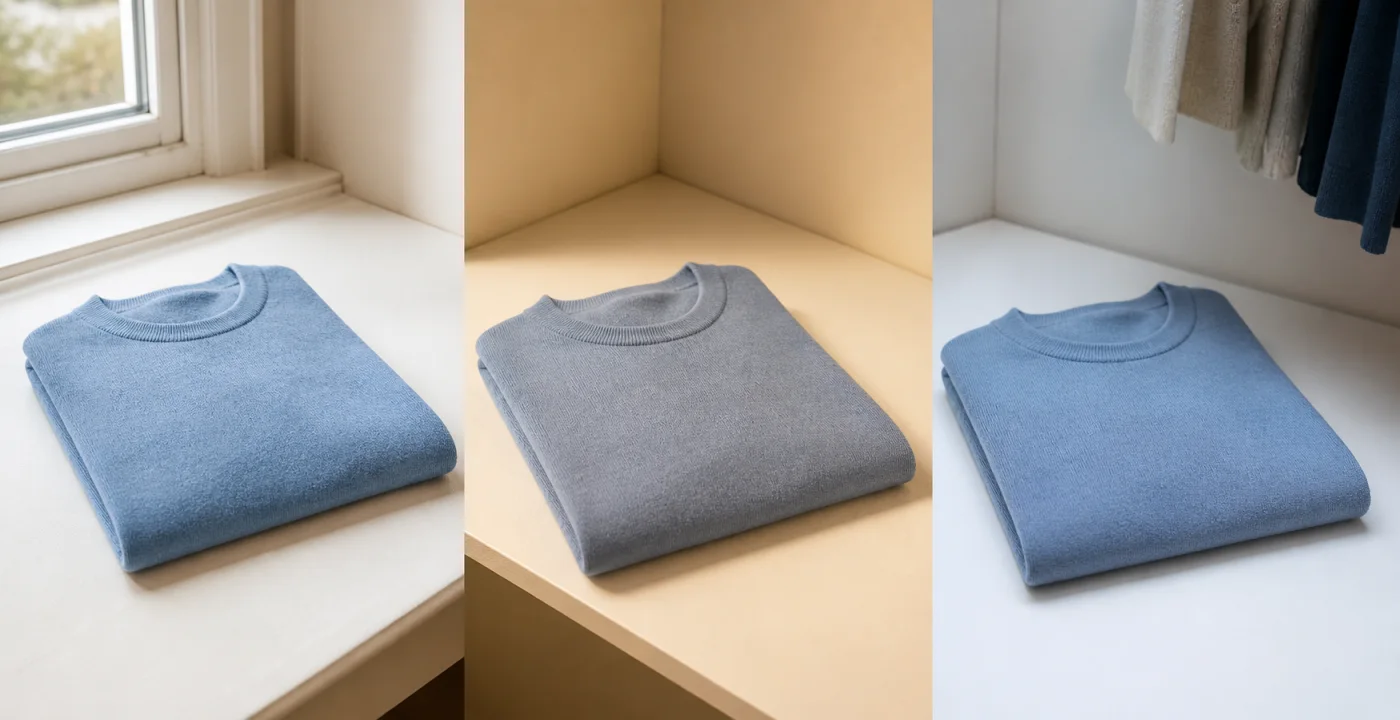
Objects do not carry one visible color
What reaches the eye depends on both the object and the light illuminating it. Daylight, warm household lamps, cool store lighting, and mixed light contain different spectral energy, so they can render the same skin, fabric, or cosmetic differently.
The visual system adapts to illumination, which helps colors feel relatively stable, but that adaptation is not perfect. Two materials that appear to match under one light can separate under another because their spectral reflections differ. This effect is commonly called metamerism.
A camera makes additional decisions
Phone cameras estimate white balance, exposure, tone mapping, sharpening, and noise reduction. Portrait modes and computational photography may process a face and background differently. Auto settings can also change between two photos even when the scene looks similar.
For a fair analysis photo, use diffuse, even light; avoid strong direct sun and mixed indoor light; remove beauty filters; keep the face and camera position stable; and include the features the analysis needs. A photograph can still only approximate the original scene.
Screens are not neutral windows
Displays differ in brightness, white point, color gamut, calibration, viewing angle, and adaptive settings such as night modes. Product images also depend on the seller’s lighting, camera, editing, and export process. An exact digital match should therefore be treated cautiously.
Use digital scans to compare, organize, and narrow choices rather than to promise laboratory-level color measurement. For an important purchase, inspect the physical item under more than one relevant light source whenever possible.
- Use one light source at a time for analysis photos.
- Turn off filters and color-shifting display modes when comparing.
- Keep exposure and distance as consistent as possible.
- Confirm physical colors in the environments where they will be worn.
Put your color knowledge into practice
Use Chroma to explore your seasonal direction, save a personal palette, and compare colors in clothes and makeup.
Download Chroma