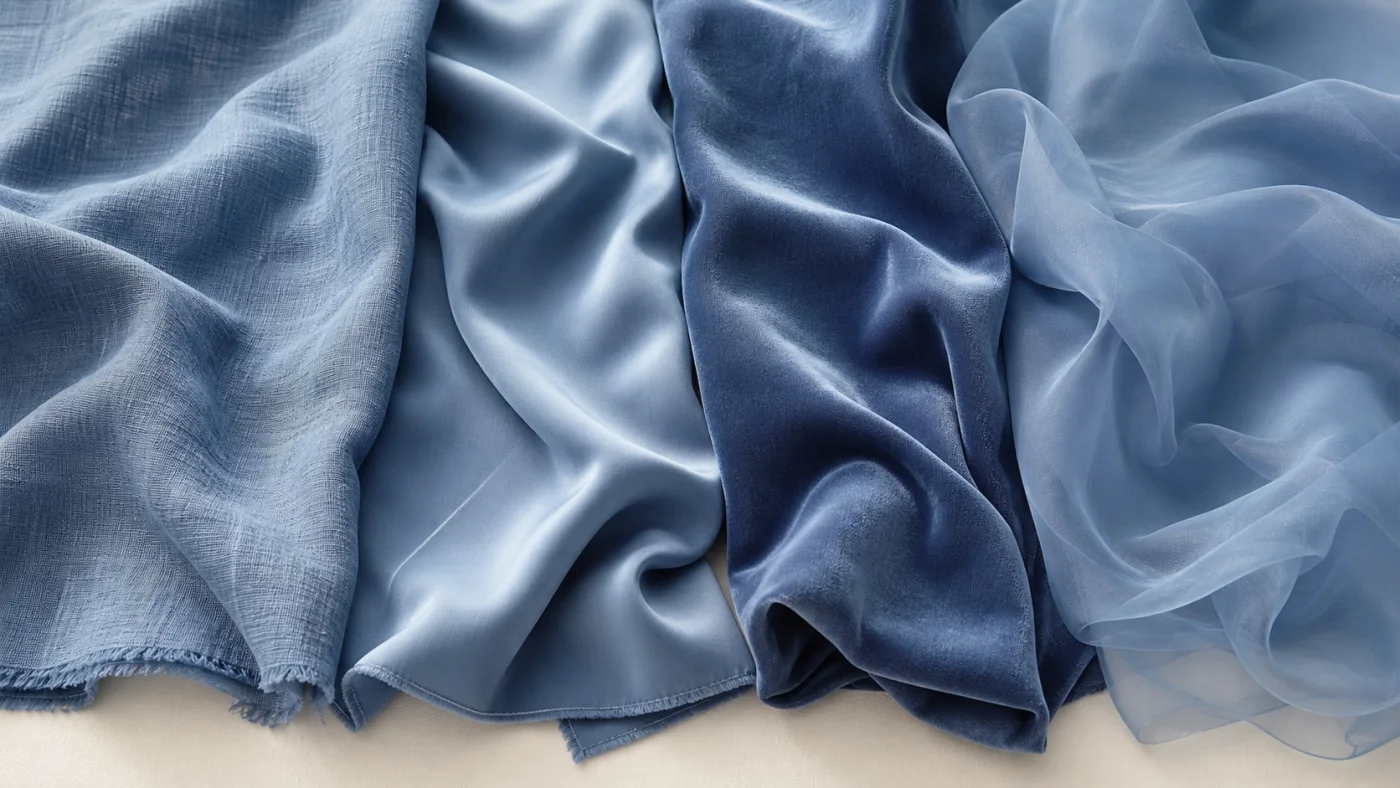
Structure shapes the surface
Weave and knit construction influence the size and direction of shadows across a fabric. A tight plain weave can look even and crisp; a loose knit creates visible depth; twill adds diagonal movement; pile fabrics create directional color shifts. These effects can make the same nominal color appear more or less uniform.
Weight changes how large the folds become. A heavier cloth may create broad areas of shadow and structure, while a light cloth forms many small folds or moves with air. This affects the garment’s visual rhythm as much as its color.
For the color vocabulary behind these comparisons, read the four dimensions of color analysis. When shopping, use practical color checks to compare the actual garment.
Opacity creates mixtures
Opaque fabrics largely conceal what is beneath them. Sheer and semi-sheer fabrics combine visually with skin, lining, or another garment. A cool translucent blouse over a warm camisole may appear more neutral; the same blouse over white may look clearer and lighter.
Test sheer pieces with the underlayer you intend to wear. A product image against a white studio background may not predict the final combination.
Choose for body, life, and style
Drape describes how a fabric hangs and moves. It influences silhouette, comfort, and formality, but it does not diagnose a color season. Choose structure or fluidity for the shape and experience you want, then assess whether the resulting highlights and shadows support your color intention.
Climate, sensory comfort, care, durability, and dress code are legitimate reasons to choose a textile even when another finish appears marginally closer to a palette. A wearable garment is more useful than a theoretically harmonious one that stays in the closet.
- Construction: woven, knitted, felted, or non-woven
- Weight: airy, medium, or substantial
- Opacity: transparent, translucent, or opaque
- Drape: fluid, balanced, or structured
Compare clothing colors in real fabric
Explore your palette and check how real fabric changes color before you buy.