Fiber is not finish
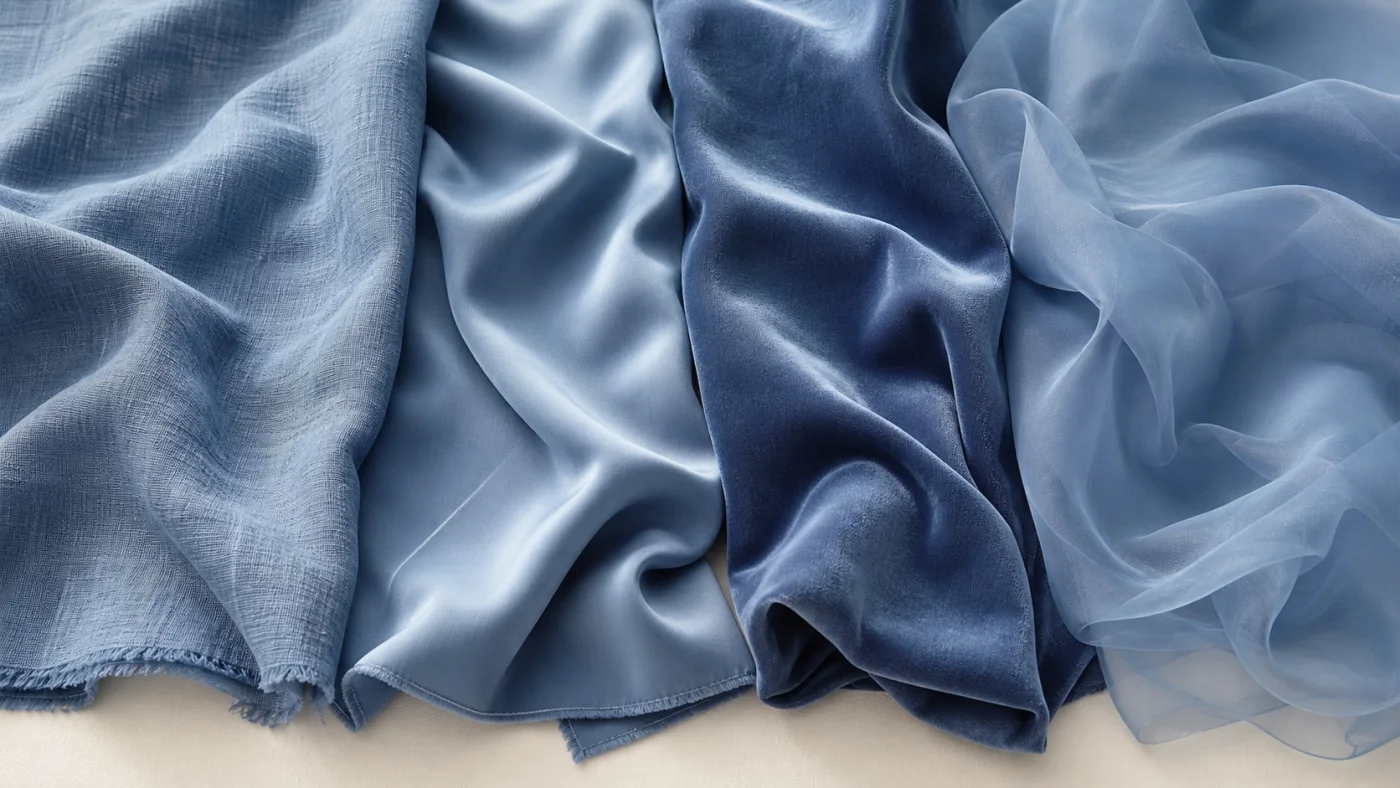
Fiber describes the material from which a textile is made; construction and finishing describe how that material becomes fabric. Cotton can be crisp poplin, soft jersey, brushed flannel, denim, or glossy sateen. Silk can be matte crepe or reflective satin. The fiber name alone cannot tell you how a color will appear.
For color analysis, inspect the finished textile: hue, value, chroma, texture, gloss, opacity, and behavior in light. For daily use, also consider temperature regulation, stretch, abrasion, drying time, cleaning, and how the fabric feels against the skin.
Three broad families
- Natural fibers include cotton, linen, wool, and silk. Their performance varies with quality, construction, finishing, and care.
- Regenerated cellulosic fibers include viscose or rayon, modal, and lyocell. They begin with plant cellulose that is dissolved and remade into fiber.
- Synthetic fibers include polyester, nylon, acrylic, and elastane. They can add durability, stretch, weather resistance, or quick drying, depending on construction.
- Blends combine properties, but the percentages and fabric structure matter more than a broad marketing label.
Read environmental claims carefully
No fiber is automatically sustainable in every product. Raw material, farming or extraction, chemical processing, energy, dyeing, durability, labor, transport, use, and end of life all affect impact. Look for specific, verifiable information rather than a single green adjective.
“Bamboo” deserves particular care. Many textiles marketed with that word are actually rayon or viscose made using bamboo as the cellulose source. Claims that the finished fabric retains natural antibacterial properties or is inherently eco-friendly should not be assumed without reliable substantiation. The sewn-in fiber label is more informative than a product nickname.
Buy for the full life of the garment
A useful choice balances appearance with wear. Check the care label before purchase, consider whether the garment will pill or stretch in its intended use, and decide whether the cleaning requirements fit your routine.
Keeping and wearing a well-made existing garment is often more practical than replacing it solely for a fiber or palette preference. Color guidance should support thoughtful use, not unnecessary disposal.
Put your color knowledge into practice
Use Chroma to explore your seasonal direction, save a personal palette, and compare colors in clothes and makeup.
Download Chroma