Translate the common light labels
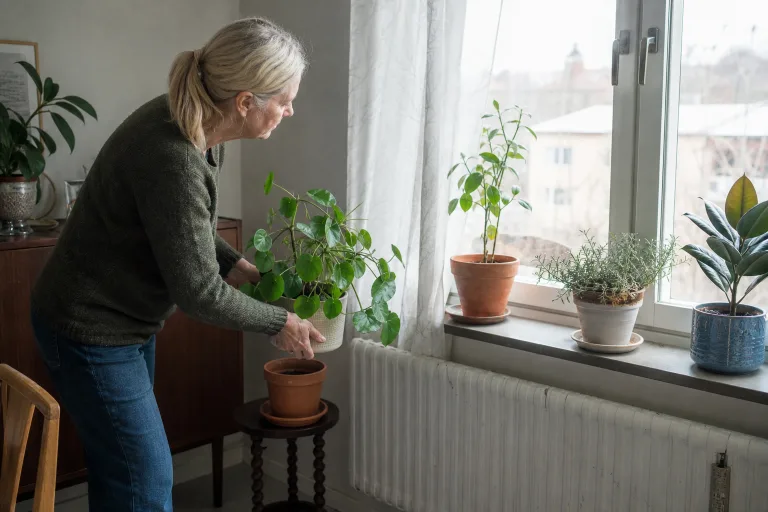
Direct light means the sun itself reaches the leaves for part of the day. Bright indirect light means a large amount of diffuse daylight without prolonged hot direct sun. Medium light is farther from the brightest window or near a window with a limited sky view. Low light is enough for some plants to persist slowly, but growth and water use will be reduced.
These are ranges, not standards. A “bright indirect” spot on a dark winter day may receive less light than the same spot in summer. Exterior trees, balconies, tinted glass, curtains, and neighboring buildings can matter more than compass direction alone.
Window direction is only the first clue
In the Northern Hemisphere, south-facing windows often offer the longest direct sun, east-facing windows gentler morning sun, west-facing windows stronger afternoon sun, and north-facing windows softer light. The pattern reverses north and south in the Southern Hemisphere. Local climate and obstructions can completely change these generalities.
Distance matters dramatically. Light usually falls quickly as you move away from the window, especially when the plant loses its view of open sky. A plant three meters into the room may receive only a fraction of the light available on the sill, even though your eyes adapt and the room still looks pleasant.
Measure trends, then watch growth
A phone light-meter app can compare spots, but camera sensors and app calculations vary. A dedicated meter gives more consistent readings. Lux measures illumination for human vision; photosynthetic photon flux density (PPFD) is more relevant to photosynthesis. For everyday home care, consistent comparisons at leaf height and at the same time of day are often more useful than treating one reading as exact.
Observe the plant for several weeks. Stronger light within the plant’s tolerance usually increases growth and water use. New leaves should approach the expected size and spacing for the species. Variegated plants may lose contrast in very low light, while some bleach when suddenly exposed to intense sun.
Daily light integral (DLI) combines intensity and duration. Two hours of strong light is not the same as twelve hours of moderate light, even when a single midday reading looks impressive. If you use a meter, take multiple readings or log over time rather than optimizing around one moment.
Read low-light and excess-light patterns
| Pattern | Possible light message | Check too |
|---|---|---|
| Long gaps, leaning | Plant is reaching for more light | Species growth habit and recent rotation |
| Smaller new leaves | Insufficient energy | Roots, nutrition, pests, season |
| Soil stays wet longer | Lower photosynthesis and water use | Pot size, drainage, temperature |
| Pale or bleached patches | Excess light or rapid acclimation | Pests and nutrient patterns |
| Dry tan window-facing areas | Sun scorch or heat | Glass temperature and drought |
No symptom belongs to light alone. Diagnose the location and timing of damage, root-zone moisture, temperature, pests, and recent moves together.
Increase light gradually
A plant grown in filtered nursery light can scorch in a window that its species would eventually tolerate. Introduce direct sun over one or two weeks, beginning with gentler morning exposure. Move the plant closer in stages or use a sheer curtain temporarily.
Do not keep moving a struggling plant every few days. Choose a sensible location, stabilize water and temperature, and judge new growth. Old stretched growth will not shorten and scorched tissue will not recover; the next leaves show whether the change helped.
Use a grow light when the room cannot provide enough
Choose a fixture intended for plant growth with published coverage or PPFD information, not only color temperature. Position it according to the manufacturer’s intensity guidance, use a timer, and give plants a dark period. Distance is a control: too far wastes output; too close can bleach or heat leaves.
A consistent 10–14 hour photoperiod is a common starting range for foliage plants, but intensity, species, and natural daylight matter. Observe leaf posture, color, and growth, then adjust gradually.
Find a better spot today
- Identify the plant’s broad light tolerance.
- Check the view of sky at leaf height.
- Compare window distance and time of direct sun.
- Move gradually if increasing exposure.
- Judge the next two or three leaves—not old damage.
Sources and further reading
Connect light with care
Save the plant and record location changes in Hanami so you can compare growth, watering, and symptoms.
Download Hanami