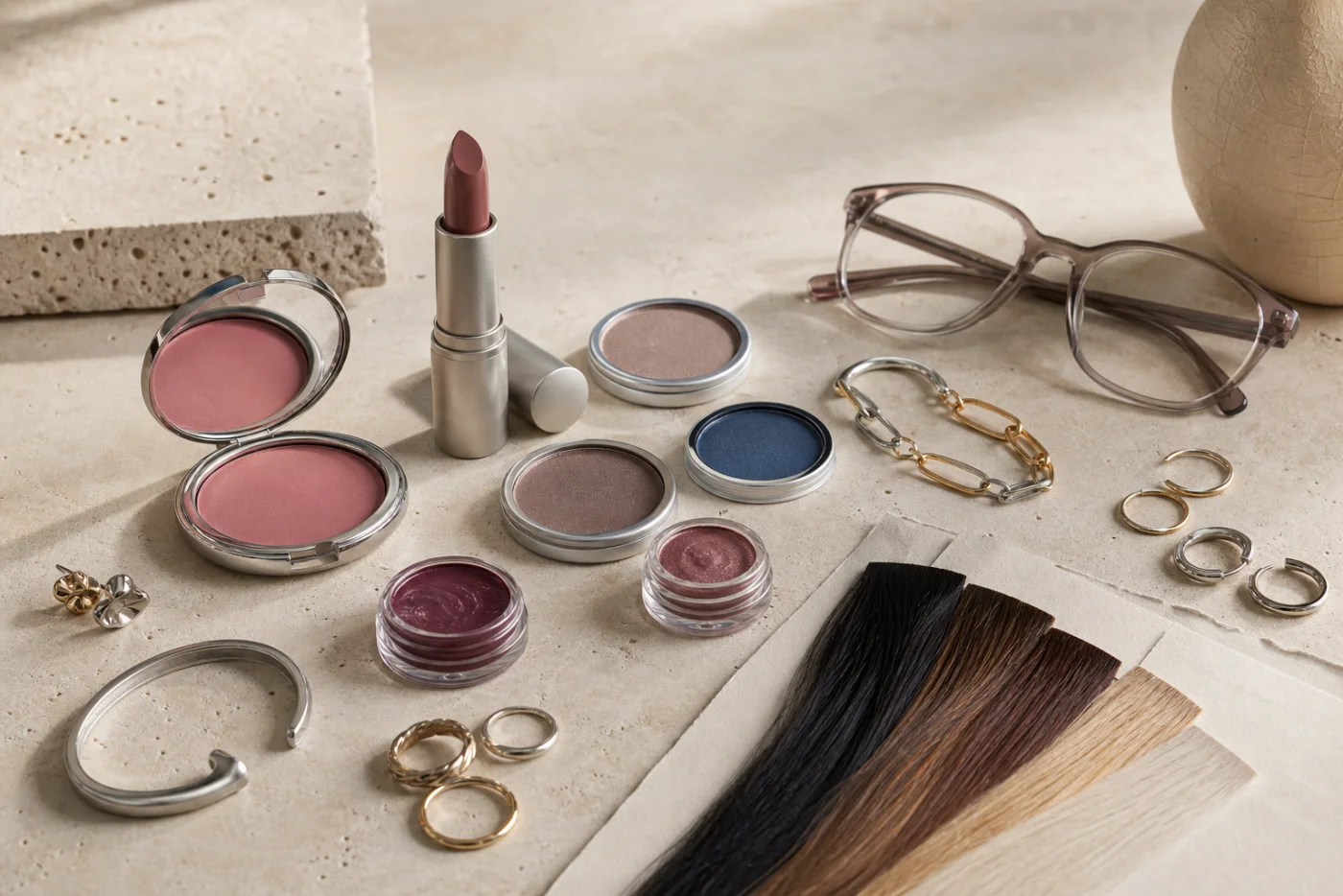
Hair color has several dimensions
Hair color is not only warm or cool. Overall depth, highlight contrast, root-to-end variation, shine, and placement all affect how it frames the face. A subtle change in highlight temperature may create a different result from changing the entire base color.
Natural hair does not need correction to fit a season. If you choose chemical color, begin with the effect and maintenance you want, use realistic references, and discuss condition, process, and upkeep with a qualified professional. Follow all product safety directions for at-home color.
Metal color and finish are separate choices
Gold, silver, copper, bronze, platinum, and mixed metals offer different temperature directions, but finish changes their impact. Bright polished metal creates crisp highlights; brushed, hammered, oxidized, or antiqued finishes look softer and often deeper.
A palette may suggest a useful starting direction, not an exclusive metal. Compare pieces of similar size and finish before deciding that temperature caused the difference. Sentimental value, durability, skin sensitivity, budget, and personal style remain important.
Frames combine color with visual weight
Eyewear sits close to the face, so both color and scale are noticeable. Transparent, fine metal, softly patterned, and bold opaque frames create different contrast even when their hues are similar.
Look at the full relationship among frame, brows, eyes, hair, and prescription lens. Comfort, fit, field of view, and professional optical guidance take priority over palette matching. A favorite bold frame can also be an intentional statement rather than an attempt to blend.
- Hair: depth, dimension, placement, and maintenance
- Metal: temperature, polish, texture, and scale
- Frames: hue, opacity, pattern, weight, and fit
Put your color knowledge into practice
Use Chroma to explore your seasonal direction, save a personal palette, and compare colors in clothes and makeup.
Download Chroma