Foundation matches skin—not a season
Foundation and complexion products should be selected for the skin they are intended to match, including depth and undertone at the jaw, neck, or other relevant area. A seasonal palette may help describe surrounding clothing and decorative makeup colors, but it should not override a real skin match.
Test complexion products in useful light and allow time to see whether the formula changes as it dries. Skin tone can vary across the face and with sun exposure, so one swatch or an app result cannot replace direct comparison.
Color and finish work together
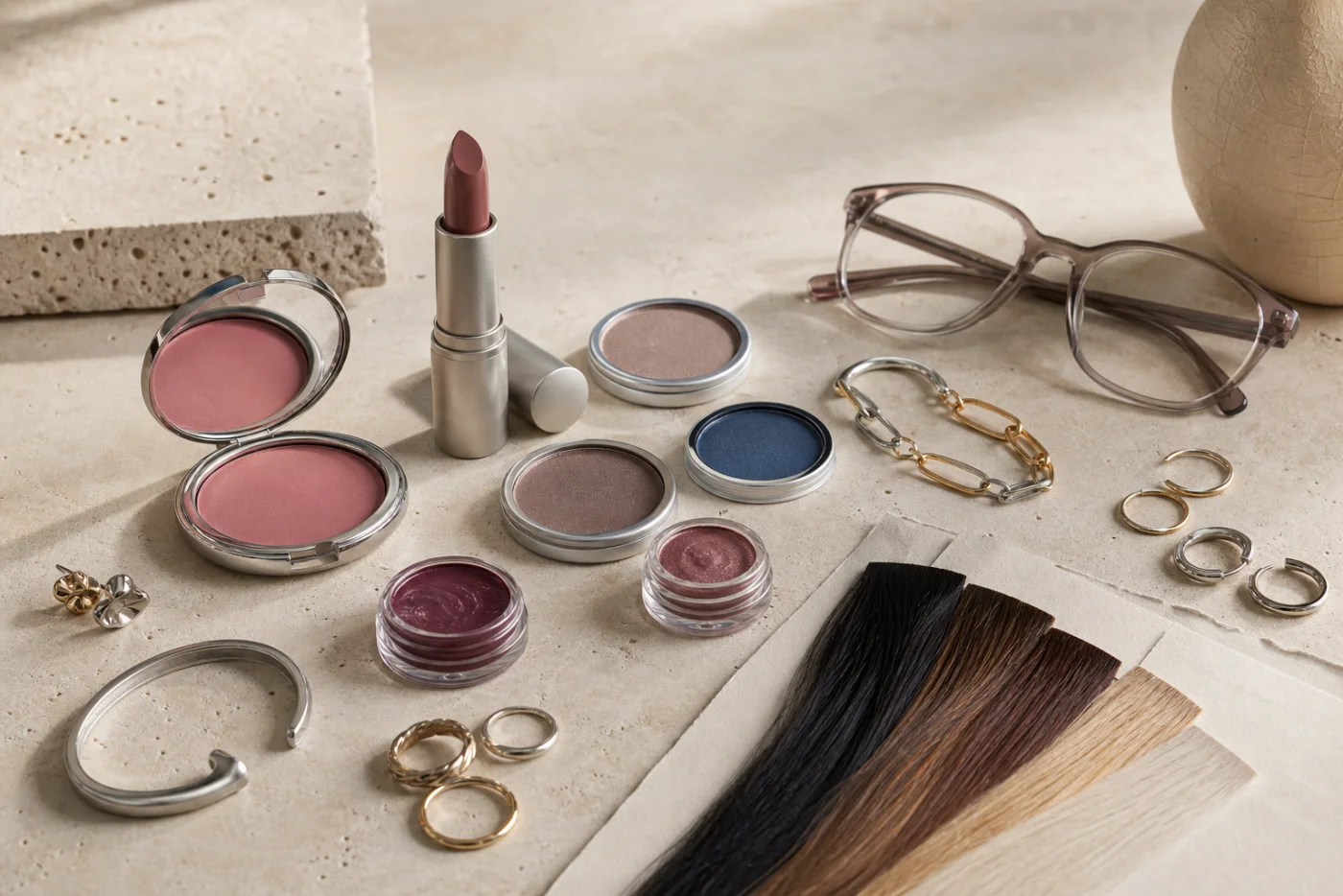
Lip, cheek, and eye colors can echo your palette’s temperature, value, and chroma. A soft palette might explore rosewood, mauve, or diffused taupe; a clearer palette might enjoy cleaner red, coral, or jewel-toned accents. These are starting points, and the same hue can change with opacity and surrounding clothes.
Sheer formulas mix visually with natural lip or skin color. Opaque products show more of their packaged hue. Matte finishes reduce reflection, while shimmer and gloss add highlights and contrast. Evaluate the complete finish rather than the color name alone.
Use products safely
Color analysis does not determine whether a cosmetic is suitable for sensitive skin or safe for an individual. Read ingredient lists, warnings, expiration or period-after-opening guidance, and the manufacturer’s directions. Terms such as “natural” or “hypoallergenic” should not be treated as guarantees.
Stop using a product that causes irritation and seek appropriate professional advice for a concerning reaction. Follow product-specific instructions for any sensitivity test; a styling lesson is not a substitute for medical guidance or professionally administered allergy testing.
- Match complexion products to skin in useful light.
- Compare decorative color in the outfit where it will be worn.
- Check labels and directions before application.
- Keep shared eye and lip products hygienic.
Put your color knowledge into practice
Use Chroma to explore your seasonal direction, save a personal palette, and compare colors in clothes and makeup.
Download Chroma