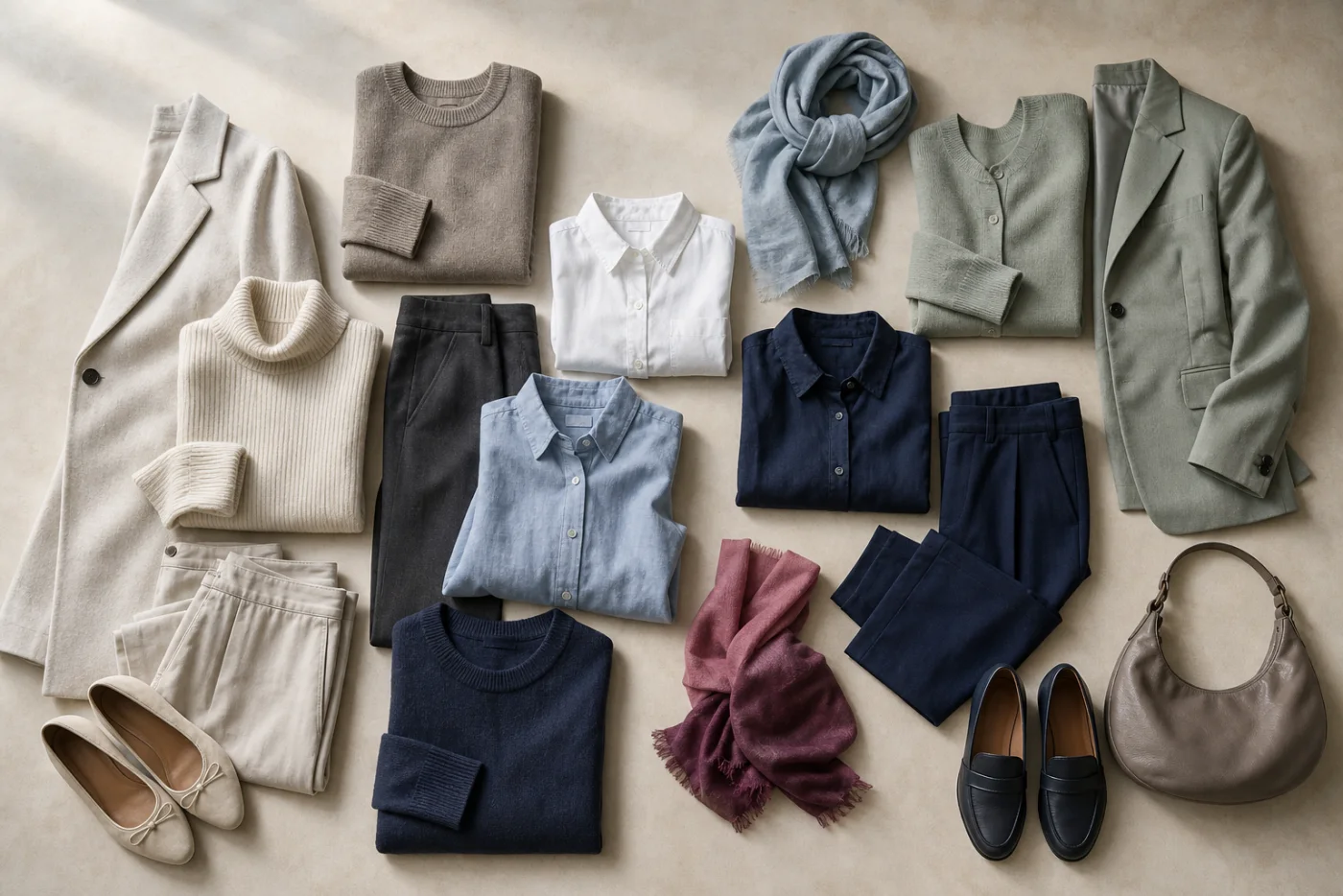
Separate color from everything else
An item can be a difficult color and still be worth keeping because the fit, comfort, function, memory, or style is excellent. It can also be a palette match and remain unworn because it does not suit your life. Audit one reason at a time so color does not take the blame for every problem.
Begin with evidence from wear. Which pieces are reached for repeatedly? Which receive compliments that matter to you? Which make complete outfits easy? Those observations are more useful than judging a rail from color alone.
Use four decisions
Near-face items create the most direct color comparison, so start with tops, scarves, collars, eyewear, and coats. Trousers, footwear, and bags can often remain flexible foundations even when their colors sit outside a suggested palette.
- Keep: works as it is and supports your real wardrobe.
- Adapt: works better with a layer, scarf, makeup choice, or different pairing.
- Explore: uncertain; test it in useful lighting and complete outfits.
- Release: no longer serves fit, function, comfort, or style—not merely because of a season label.
Buy for connection
After the audit, look for repeated friction. Perhaps several tops lack a useful dark layer, or a favorite skirt needs a lighter neutral. A good addition should complete multiple outfits and meet practical requirements for season, care, and comfort.
Use garment scans as one source of information, then check the actual item against nearby pieces. A camera can compare an image with your saved palette, but it cannot fully capture fit, fabric behavior, lighting changes, or how much you enjoy wearing something.
Put your color knowledge into practice
Use Chroma to explore your seasonal direction, save a personal palette, and compare colors in clothes and makeup.
Download Chroma