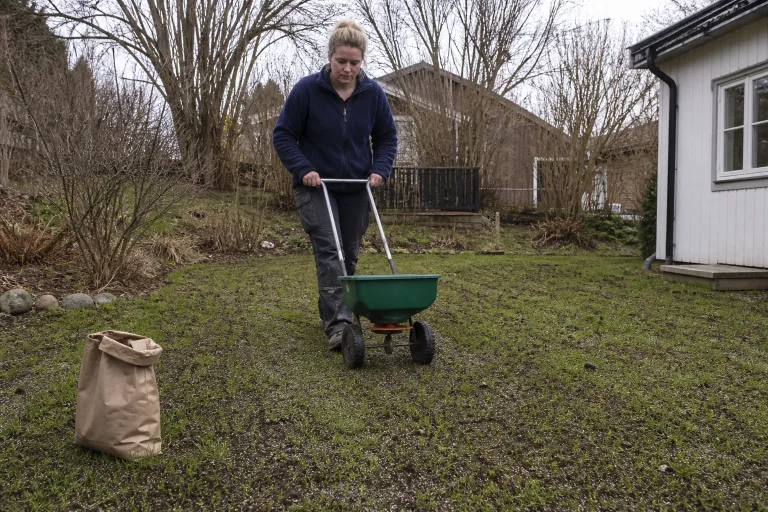
Decide whether overseeding solves the problem
Overseeding is useful when living turf remains but density, cultivar mix, or recovery needs improvement. It is less effective when most of the lawn is dead, the grade or soil must be rebuilt, aggressive perennial weeds dominate, or the grass species is fundamentally wrong for the site. Those conditions may justify spot repair, sod, plugs, sprigs, or full renovation.
Find out why the lawn thinned. Deep shade, surface compaction, poor drainage, chronic drought, dog traffic, mower scalping, and disease will affect seedlings too. Correct the limiting factor first or seed a grass adapted to it. In sites that cannot support turf, consider a different groundcover or use.
Choose a window with time for establishment
Many cool-season lawns establish best from late summer into early autumn, when soil remains warm, air begins to cool, and annual weed pressure often declines. Spring can work but leaves less time before summer stress and can conflict with some weed-control programs.
Warm-season grasses are established during reliably warm active growth, commonly late spring through early summer. Some warm-season species are improved primarily with sod, plugs, or sprigs, and overseeding them with a winter grass changes the management system. Use local extension guidance for species and frost dates.
Buy seed for the site, not the front of the bag
Choose species and cultivars adapted to your climate, daily sun, soil drainage, irrigation, traffic, disease history, and desired maintenance. Read the seed label for named varieties, germination percentage, purity, other crop seed, weed seed, and test date. Avoid choosing only by a broad phrase such as “sun and shade.”
A blend combines cultivars of one species; a mixture combines species. Both can provide resilience when components suit the site. Buy enough for the measured lawn area and use the label’s overseeding rate, which may differ from the new-lawn rate.
Seed needed = lawn area × label rate for overseedingPure live seed (PLS) adjusts bulk weight for purity and germination: PLS fraction = purity × germination. Certified turf seed is usually straightforward for homeowners, but PLS helps compare lots or work with restoration-style seed specifications.
Create seed-to-soil contact
- Mow safely lower. Reduce competition without scalping crowns. If the lawn is tall, lower it across earlier mowings.
- Remove obstruction. Rake heavy debris and collect clippings that would keep seed suspended above soil.
- Open the surface. Core aeration, scarification, vertical mowing, slit seeding, or firm raking can expose soil. Choose the tool for compaction, thatch, lawn type, and damage tolerance.
- Correct the grade first. Fill isolated depressions with compatible soil in a separate leveling plan; do not bury existing turf under a thick blanket.
- Use soil-test amendments. Apply lime, nutrients, or other amendments from evidence and local guidance, not because overseeding kits bundle them.
Core aeration and seeding often pair well on compacted cool-season turf: cores improve temporary access to soil, but holes alone are not enough if most seed remains caught in leaves. Slit seeders place seed directly into shallow grooves and can improve contact when calibrated properly.
Calibrate and sow in crossing passes
Weigh the seed required for a measured test area. Set the spreader low, make a pass, and adjust before treating the whole lawn. Divide the total seed into two portions and apply in perpendicular directions for more even coverage. Keep passes consistent and shut the spreader off while turning on paving.
After sowing, lightly rake exposed areas or roll only enough to press seed against soil. Seed should not be buried deeply; label guidance varies, but most turfgrass seed needs shallow placement. A very thin compatible topdressing can reduce drying on bare areas, but thick soil or compost can smother existing crowns.
Keep the seed zone moist, not flooded
Use short, gentle irrigations often enough that the upper soil does not dry during germination. Frequency can range from several brief events on hot windy sand to much less in cool humid weather. Watch the surface instead of copying a fixed schedule. Prevent puddles, runoff, and seed movement.
Grass species germinate at different rates. Continue protecting slower components even after fast seedlings appear. As seedlings root and fill, reduce frequency gradually and increase the depth of each event. This transition teaches roots to follow water rather than remaining at the surface.
| Stage | Water goal | Traffic and mowing |
|---|---|---|
| Before germination | Keep the seed zone consistently moist | Keep people and pets off |
| Early seedlings | Protect shallow roots without saturation | Avoid turns and equipment |
| First mowing | Allow surface to firm before mowing | Sharp light mower; one-third rule |
| Establishing turf | Transition deeper and less often | Increase use gradually |
Make the first mow count
Mow when the new grass is tall enough that the cut removes no more than one-third while reaching the desired species range. Wait for the soil surface to be firm, use a sharp blade, and make gentle turns. Regular mowing after this point encourages tillering and helps light reach smaller seedlings.
Follow the seed label and local advice before using herbicides on new turf. Many products require several mowings or a defined establishment period. Feed only according to soil results and establishment guidance; high nitrogen can push tender leaf growth before roots are ready.
The overseeding sequence
- Correct the reason for thinning.
- Choose adapted seed and a long enough weather window.
- Measure area and calibrate the label rate.
- Open the surface and establish seed-to-soil contact.
- Keep the seed zone moist, then transition irrigation.
- Mow on time with a sharp, light mower.
Sources and further reading
Build density from evidence
Hanami helps bring the same observation-first approach to the plants you care for every day.
Download Hanami