Follow the grass into slower growth
Cool-season turf often regains leaf and root activity as summer heat eases, making early autumn valuable for repair and measured nutrition. Warm-season turf is moving toward slower growth or dormancy in many climates, so late nitrogen can prolong tender growth at the wrong moment. Local weather and grass type matter more than the month printed on a bag.
Walk the lawn and note density, weeds, drainage, traffic, irrigation gaps, and disease patterns. Decide which work needs active recovery and which can wait. Aeration, seeding, and aggressive thatch work started too late may leave open soil and immature plants.
Feed the lawn that exists
Start with a soil test for phosphorus, potassium, pH, and amendment guidance. Nitrogen recommendations also depend on grass type, maintenance level, clippings, irrigation, soil, local water-quality rules, and how much has already been applied this year.
Many cool-season programs emphasize autumn nitrogen because the grass can use it during active growth without the same spring surge. That principle is not permission for a universal “winterizer” dose. Apply only a locally appropriate product and amount while turf can use it, sweep granules from hard surfaces, and keep fertilizer away from drains and water.
Do not apply phosphorus or lime automatically because a seasonal product includes it. Add them when the soil report and local rules support them. Read the soil test and fertilizer guide before calculating product weight.
Repair early enough to establish
Late summer into early autumn is often the strongest renovation period for cool-season lawns. Correct drainage and compaction first, then core-aerate where needed and overseed thin turf with locally adapted cultivars. New seed needs time for germination, rooting, and several cuts before severe cold.
If the main seeding window has passed, spot repair may be safer to postpone. Dormant seeding—placing seed late enough that it remains ungerminated until spring—is a separate regional technique with different risks. Do not let a warm spell trigger tender seedlings that cannot mature.
Keep light and air reaching the turf
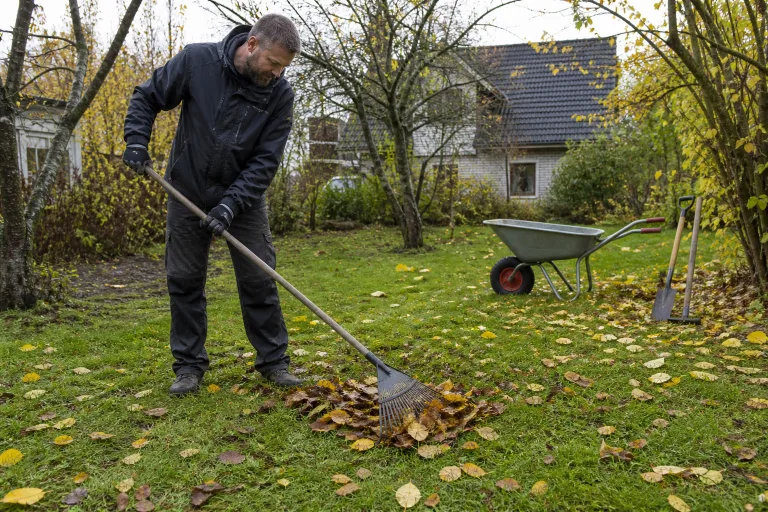
Do not leave a wet, matted canopy over grass. A mower can shred a light leaf layer into pieces that filter between blades; heavier fall requires collection or repeated passes. Use clean leaves as mulch or compost where appropriate, and remove diseased or contaminated material according to local advice.
Continue mowing while grass grows, following the one-third rule. Avoid a sudden scalp for the final cut. A modestly lower final height may help leaf collection and reduce matting for some cool-season lawns, but never cut below the safe range for the species. Keep the blade sharp and avoid mowing saturated or frosted turf.
Water the soil and protect the system
Cooler weather reduces demand, but roots can still need moisture during dry autumn periods. Check the soil and account for rain instead of shutting irrigation down by date alone. Avoid leaving the turf saturated as disease pressure and cold increase.
Where systems can freeze, follow the manufacturer’s and local professional’s winterization process. Shut off and drain exposed hoses and fittings as required, but do not assume that forcing high-pressure air through an irrigation system is a safe do-it-yourself job. Store spreaders clean and dry, sharpen the mower blade, and service equipment before spring demand returns.
A practical autumn sequence
- Early window: identify grass, review the year, soil-test, correct irrigation coverage, aerate compacted areas, and seed while establishment time remains.
- Active growth: mow consistently, manage leaves, water from soil conditions, and apply only locally recommended nutrients.
- Growth slows: stop disruptive work, continue leaf removal, reduce irrigation with weather, and avoid forcing late leaf growth.
- Before freeze or dormancy: complete the final safe mow, protect irrigation components, clean tools, and record unresolved problems.
Leave the lawn ready—not overtreated
- No thick leaf mats or piles of clippings.
- No fertilizer or soil amendment left on paving.
- No open renovation started too late to recover.
- No irrigation leak or exposed component left for freezing weather.
- A short note records what worked and what needs spring attention.
Sources and further reading
End the season with a clear record
Hanami helps keep observations, care clues, and next steps close at hand.
Download Hanami