Plan around the site, not an ideal lawn
Measure the area and map full sun, shade, slopes, downspouts, compacted routes, and places where water stands. Grass cannot compensate for deep shade, a failed grade, or constant traffic. Fix drainage and decide where a path, planting bed, or different groundcover would perform better before buying seed.
Choose between seed and sod honestly. Seed costs less and offers more cultivar choice, but it needs a suitable sowing window and weeks of careful moisture. Sod covers soil immediately and can reduce erosion, but it still needs prepared soil, close contact, and attentive watering.
Choose grass that belongs there
Match the species and cultivars to climate, light, drainage, irrigation, wear, and maintenance. A mixture combines species; a blend combines cultivars of one species. Read the analysis label for named varieties, purity, germination, weed seed, and test date—not only the marketing name.
Use the package’s new-lawn rate. More seed does not create a faster lawn: crowded seedlings compete for light, air, water, and nutrients.
Seed needed = measured lawn area × label rate for a new lawnBuild a firm, even seedbed
- Clear the site. Remove construction debris, stones, persistent weeds, and old turf as the project requires.
- Set the grade. Direct surface water away from buildings without creating low pockets. Complete major soil movement before fine preparation.
- Test the soil. Use a representative laboratory sample for pH and nutrient recommendations. Incorporate prescribed amendments while the soil is accessible.
- Loosen, then settle. Correct severe compaction, but avoid repeatedly pulverizing wet soil. Rake to a fine surface and lightly firm it.
- Check the finish. Footprints should be shallow, not ankle-deep. Remove ridges and hollows now; grass will reveal every one later.
A seedbed needs pores for roots and enough firmness for consistent depth. Fluffy soil settles unevenly and lets seed fall too deep; heavily compacted soil limits rooting and infiltration.
Sow in two directions
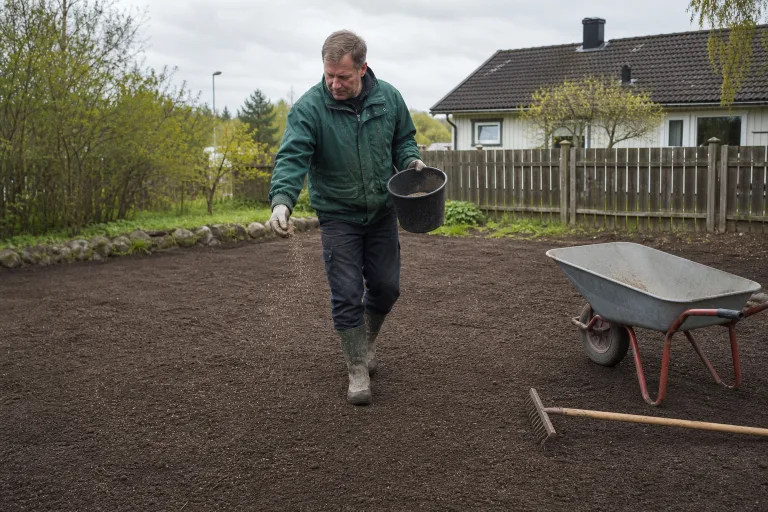
Weigh the seed for the measured area and calibrate the spreader on a small section. Divide the seed in half. Apply one half in parallel passes and the other at right angles. Shut the spreader while turning on paving and sweep escaped seed back onto soil.
Lightly rake so most seed remains close to the surface, then roll or press only enough to create contact. Follow the seed label for depth; small turf seed is easily buried too deeply. On erosion-prone areas, use a clean seed-starting mulch or a product intended for turf establishment rather than a thick layer that blocks light and air.
Before you turn on the water
- The grade drains in the intended direction.
- The surface is firm, fine, and free of large clods.
- The correct seed weight has been applied evenly.
- Seed is touching soil and has not collected in piles.
- Sprinklers cover the whole area without runoff.
Keep the seed zone moist—not flooded
Start with a gentle application that moistens the prepared soil without moving seed. During germination, irrigate briefly whenever the surface approaches dryness. Hot wind and sandy soil may require several short events; cool humid weather and rain may require none. The surface condition is the signal.
Different grasses emerge at different speeds. Continue protecting slower components after the first green haze appears. As roots lengthen, reduce frequency and increase depth gradually. Puddling, runoff, algae, and a sour smell indicate too much water or poor drainage.
Make a clean first cut
Keep people, pets, and heavy equipment off soft soil. Mow when seedlings are tall enough that removing no more than one-third brings them toward the recommended height. Let the surface firm first, use a sharp light mower, and make wide gentle turns.
Continue regular mowing to encourage density. Delay herbicides until the product label permits use on new turf, and add nutrients only from an establishment recommendation or soil result. Shift toward the normal deep-watering routine as roots develop.
A perfect first week cannot rescue an unsuitable species or failed drainage. If establishment is uneven, compare coverage, seed depth, irrigation distribution, compaction, and washout before broadcasting more seed.
Sources and further reading
Start with the conditions
Hanami brings the same calm, observation-first thinking to everyday plant care.
Download Hanami